Went to the opening night of Matthew Bourne's "Swan Lake" Wednesday evening at the Orpheum Theater in San Francisco. The show is on a tour celebrating the tenth anniversary of its initial production in London. If you don't know Matthew Bourne, you should -- he makes fascinating theater, always with dance at the heart of it. I'm not generally a big dance fan; most ballet bores me, because I love stories and it's a challenge to tell a rich story using only movement and music. In fact, Bourne is really the only choreographer I've felt ever really pulled it off.
SPOILER ALERT! I'll be discussing certain aspects of the show, including its ending. Although the story is a well-known one, if you don't want to know how it turns out, skip the next two paragraphs.
I saw a production of Matthew Bourne's "Swan Lake" about seven years ago in New York, with many of the same cast members who originated the work in London. What makes this a unique "Swan Lake" is that the swans are all played by men. So when the Prince ends up falling for one of the swans, it has a whole different flavor. The show was amazing. It literally moved me to tears. Twice. Early on there is a scene in which the Prince has reached the depths of despair. His mother the Queen enters and in a heart-rending pas de deux, he attempts to connect with her in order to receive comfort -- and she finds ways of avoiding contact. It was a beautiful example of how movement could convey desire and emotion. Then, at the end, even after the Prince died, I didn't cry again -- until a tableau of the Swan holding the boy who played the young Prince appeared behind a scrim, above the lifeless body of the adult Prince still splayed out on the royal bed.
The touring show is an excellent rendition, but it didn't measure up to what I saw in New York. I think there are three main reasons for this. First, I think it would be hard for any production to live up to the memory I have of that evening seven years ago that moved me so deeply. Second, the company overall was more athletic and graceful; they were simply better dancers. But third -- and I think most important -- two key things were changed about the production. First, a boy does not play the Prince in his youth. The same dancer portrays him at age 10 and age 20-something. This lessens the impact of the initial scenes when the young Prince is dreaming and when he is being taught the ways of royalty. And the impact of that final tableau is terribly undermined when its not the small boy being held in the arms of the Swan, but a full-grown man.
The second change was much smaller, but still had a great impact on how the story is experienced. The Prince's descent into depression is indicated partly when he picks up a bottle of liquor and drinks from it. Tonight, he took a swallow, then coughed and set the bottle down. In the production I saw in New York, the dancer first took a small swallow -- as though simply trying to get over the initial burn, then takes two or three more long pulls. It indicated such deep unhappiness, as if the Prince is saying to us, "I must numb myself as quickly as I can manage." A subtle thing, but I think an important one.
Overall, however, if you haven't seen this "Swan Lake," you ought to; it's an electric theatrical experience.
Thursday, March 23, 2006


Wednesday, March 22, 2006
Invigorating Discussion
Going on here. The subject is the influence of religion in politics. Some smart people saying interesting things. Check it out.
Tuesday, March 21, 2006
Science vs. Religion, Consensus vs. Certainty
Although the debate of evolution vs. intelligent design seems to be over, the conflict between rational thought and religion still rages. It presents itself in subtle ways, undermining progress on global warming, informing the debate on same-sex marriage and the delivery of medical treatment.
Yet, as the discussion continues, what I have noticed is the level of certainty vs. consensus. Specifically, religious leaders seem to have certainty in abundance, but have a hard time reaching consensus. So many are absolutely certain their view of what it means to be Christian (or Muslim or Jewish) is correct, yet they can't reach a consensus on basic issues, such as the divinity of Christ or whether one is saved by grace or good works or whether dancing is a sin or not. (Or drinking. Or gambling. Or...)
Science, on the other hand, has plenty of consensus, but almost no certainty. Every scientist around the world agrees on what the speed of light is, what the chemical composition of water is, the frequency of ultraviolet light...or thousands of other facts. Yet, for all their agreement, scientists stand ready to change their minds and come to a different consensus when new evidence comes along that conflicts with current thought.
So why does it seem our President puts so much more trust in religion than he does in science?
Yet, as the discussion continues, what I have noticed is the level of certainty vs. consensus. Specifically, religious leaders seem to have certainty in abundance, but have a hard time reaching consensus. So many are absolutely certain their view of what it means to be Christian (or Muslim or Jewish) is correct, yet they can't reach a consensus on basic issues, such as the divinity of Christ or whether one is saved by grace or good works or whether dancing is a sin or not. (Or drinking. Or gambling. Or...)
Science, on the other hand, has plenty of consensus, but almost no certainty. Every scientist around the world agrees on what the speed of light is, what the chemical composition of water is, the frequency of ultraviolet light...or thousands of other facts. Yet, for all their agreement, scientists stand ready to change their minds and come to a different consensus when new evidence comes along that conflicts with current thought.
So why does it seem our President puts so much more trust in religion than he does in science?
Monday, March 20, 2006
A New Separation of Church and State
Kevin Phillips's new book, "American Theocracy" addresses, in part, the rising influence of religion in the affairs of state. Despite Thomas Jefferson's quote about "a wall of separation," religious leaders have more sway in the halls of power than at any time in America's history. Our President has said, "God wants me to be President," and that rather than going to his own father for advice, he seeks counsel from "a higher father."
Neocons will often counter that the Constitution says nothing about separation of Church and State, but only that "Congress shall make no law respecting an establishment of religion, or prohibiting the free exercise thereof." It says nothing about the influence religion should be able to have on the thought processes of lawmakers and executives.
The problems begin when two different schools of religious thought come into conflict. When it gets down to "God said x" or "No, God said y" or "What God MEANT to say was z," how does one decide which is right? On an individual level, that's easy -- you make up your own mind about what feels true. But at the level of, say, the Supreme Court, there is no way to rationally define religious truth. The Court stays out of it. "God said, I believe it, that settles it" doesn't cut it. You have to base your arguments for or against a certain position solely on the the Constitution and established case law.
Unfortunately, there seem to be plenty of voters who think we'd be a lot better off if judges applied Christian theology to their decisions. Not just judges, either: senators, the President, the Undersecretary for Housing and Urban Development, everybody.
My thought is that we need to go in the exact opposite direction. Not that those who make, execute, enforce and interpret the law shouldn't be religious, but that they erect a wall of separation between their personal beliefs and their public duty. In fact, that each of us as voters should erect such a wall, so that religious thought does not obscure that duty. We can have faith to guide us in our invidivual lives, but when it comes to making decisions for our communities, we should be guided solely by what logic, rationality and common sense indicate is best for the overall good.
We should choose our leaders not because they are Baptists or Episcopalians or Presbyterian, but because they have the skills and commitment to lead. We should make laws not because they agree with the Bible, but because they make sense for our communities. We should implement policies not because we hear the inner stirrings of what we believe is God speaking to us, but because the policies are effective.
Neocons will often counter that the Constitution says nothing about separation of Church and State, but only that "Congress shall make no law respecting an establishment of religion, or prohibiting the free exercise thereof." It says nothing about the influence religion should be able to have on the thought processes of lawmakers and executives.
The problems begin when two different schools of religious thought come into conflict. When it gets down to "God said x" or "No, God said y" or "What God MEANT to say was z," how does one decide which is right? On an individual level, that's easy -- you make up your own mind about what feels true. But at the level of, say, the Supreme Court, there is no way to rationally define religious truth. The Court stays out of it. "God said, I believe it, that settles it" doesn't cut it. You have to base your arguments for or against a certain position solely on the the Constitution and established case law.
Unfortunately, there seem to be plenty of voters who think we'd be a lot better off if judges applied Christian theology to their decisions. Not just judges, either: senators, the President, the Undersecretary for Housing and Urban Development, everybody.
My thought is that we need to go in the exact opposite direction. Not that those who make, execute, enforce and interpret the law shouldn't be religious, but that they erect a wall of separation between their personal beliefs and their public duty. In fact, that each of us as voters should erect such a wall, so that religious thought does not obscure that duty. We can have faith to guide us in our invidivual lives, but when it comes to making decisions for our communities, we should be guided solely by what logic, rationality and common sense indicate is best for the overall good.
We should choose our leaders not because they are Baptists or Episcopalians or Presbyterian, but because they have the skills and commitment to lead. We should make laws not because they agree with the Bible, but because they make sense for our communities. We should implement policies not because we hear the inner stirrings of what we believe is God speaking to us, but because the policies are effective.
Saturday, March 18, 2006
Slums of Beverly Hills (and almost everywhere else)
Generally, I'm all for freedom. I love liberty. If what you're doing doesn't affect my life, you knock yourself out at whatever it is that blows air up your dress. But not when it comes to architecture, it might be time for a LOT more government interference, at least in the United States. My specific beef is with municipalities that allow homeowners to build homes in a mish-mash of styles, regardless of the landscape, climate or architectural tradition of the place.
For an example of how residential architecture should be done, look at this Tuscan hill town...
...or this village in Germany...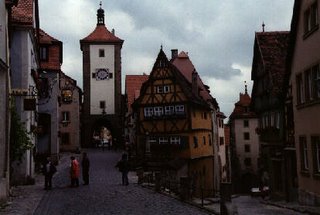
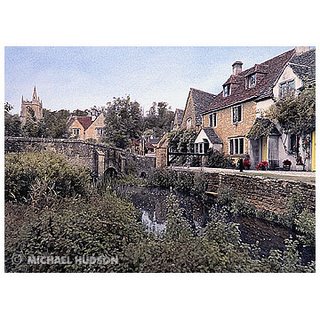
...or this hamlet in the Cotswolds...
Now contrast those with these examples.
First, here are a couple that work in Beverly Hills...
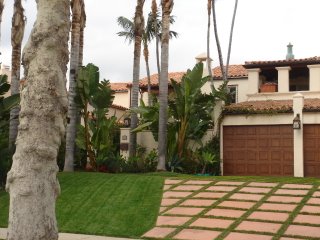
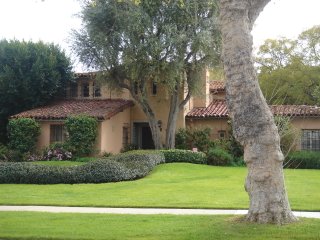
They work because they respect the Spanish heritage of the region, and the climate of the LA basin. The question is, why within just a few blocks do we find all of THESE houses?
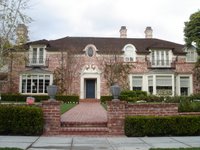
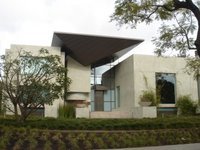
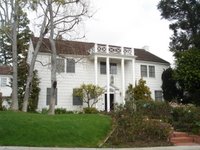
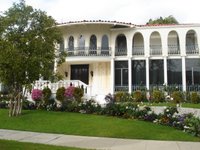
Two of these homes were actually next door to each other. And that happens throughout Beverly Hills -- you drive and find Tudor next to modern next to Spanish next to Italianite next to colonial. There is no thought given to how a home relates to its neighbors or to the community at large.
There are ways to balance the need for individual freedom and creativity with the desire to enhance the sense of community through architectural unity. Look at these examples from Seaside, Florida. Seaside is a planned community where homeowners have the opportunity to create an individual home, yet are required to adhere to certain design standards, such as having porches of a certain minimum size and staying within a proscribed color palette. The architects who planned the community established the code which provides a balance of both freedom and restriction.
Here's the result...

I don't have a problem with my sensibilities being offended -- as long as you don't do it in such a long-lasting, public medium like architecture.
For an example of how residential architecture should be done, look at this Tuscan hill town...

...or this village in Germany...
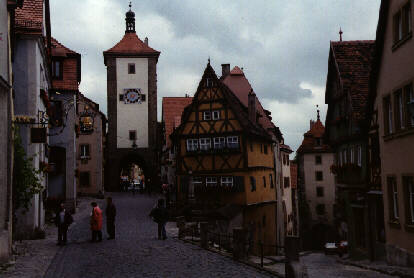
...or this hamlet in the Cotswolds...
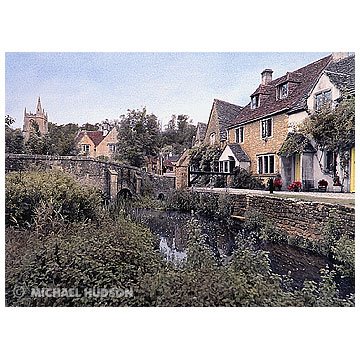
Now contrast those with these examples.
First, here are a couple that work in Beverly Hills...

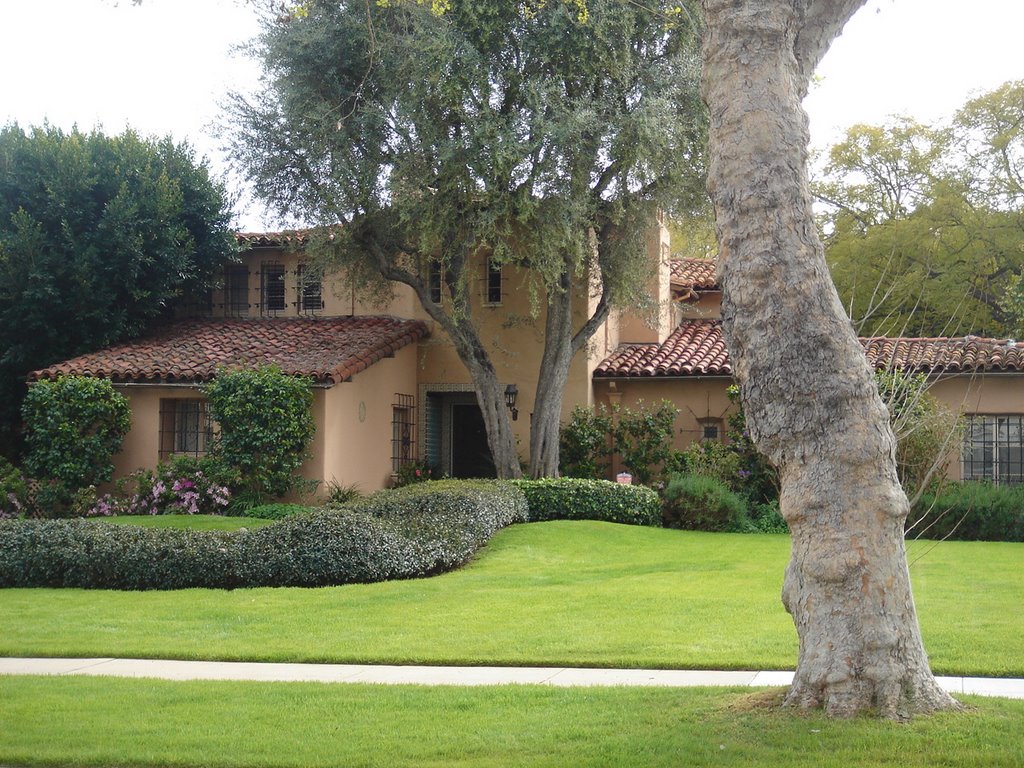
They work because they respect the Spanish heritage of the region, and the climate of the LA basin. The question is, why within just a few blocks do we find all of THESE houses?


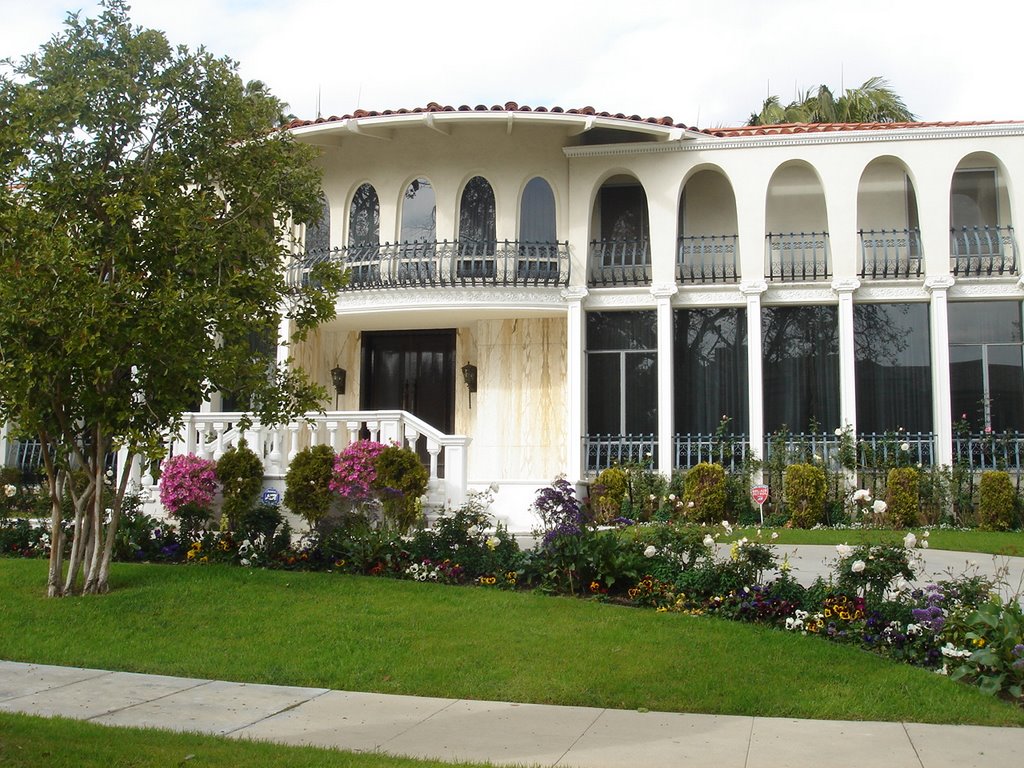
Two of these homes were actually next door to each other. And that happens throughout Beverly Hills -- you drive and find Tudor next to modern next to Spanish next to Italianite next to colonial. There is no thought given to how a home relates to its neighbors or to the community at large.
There are ways to balance the need for individual freedom and creativity with the desire to enhance the sense of community through architectural unity. Look at these examples from Seaside, Florida. Seaside is a planned community where homeowners have the opportunity to create an individual home, yet are required to adhere to certain design standards, such as having porches of a certain minimum size and staying within a proscribed color palette. The architects who planned the community established the code which provides a balance of both freedom and restriction.
Here's the result...


I don't have a problem with my sensibilities being offended -- as long as you don't do it in such a long-lasting, public medium like architecture.
Friday, March 17, 2006
As U Lyk It
The world is filled with adaptations of Shakespeare, both original texts in new settings (think Baz Luhrman's "Romeo+Juliet") and adaptations of Shakespeare's stories (think today's release of "She's The Man," a modern tale based on "Twelfth Night.") But I don't think I've seen an adaptation which translates Shakespeare to a modern setting, retaining most of the original text, yet changing certain speeches to reflect the new take on the story, and adding new lines with a modern flavor, but that still have the distinctive style of the Bard.
"As U Lyk It" takes one of the master's greatest comedies and reimagines it in modern-day Pasadena. The basic story is still there - but instead of one duke banishing his brother to the forest, the new mayor of Pasadena steals the election from his elder brother and sends him out into the Mojave Desert. Instead of the brave Orlando defeating the Duke's champion, Charles, in battle, the two men are now drivers who duel on the short track NASCAR course the new mayor has established in the Rose Bowl.
"As You Like It" is all about love in its various forms, and at the end, everyone is happily wed. In "As U Lyk It," love once again reigns supreme, but adapter Alison Carey has broadened the love interest to include gay and lesbian couples, who also desire to marry. The famous "seven ages of man" speech is brilliantly done, though man's ages in this "California concoction" include cartoon, sitcom, reality show, drama, rerun, and ultimate cancellation.
The audience didn't seem to care much for the show; at least 60 people left at intermission. But the more I think about it, the more I like it. Although Carey gets a bit too strident with the politics, the rewriting is imaginative yet respectful of the original, and the issues raised are real and contemporary. My problems are with the acting and direction. Although the performances aren't awful, I think a recasting of the some of the roles would help the show tremendously, and director Bill Rauch could learn a few things about subtlety. (The show, however, is still in previews, so I'll cut them some slack.) What's more, they might do better in a less conservative community than Pasadena, where the Bush-bashing might have a better chance of getting the desired laughs.
"As U Lyk It" takes one of the master's greatest comedies and reimagines it in modern-day Pasadena. The basic story is still there - but instead of one duke banishing his brother to the forest, the new mayor of Pasadena steals the election from his elder brother and sends him out into the Mojave Desert. Instead of the brave Orlando defeating the Duke's champion, Charles, in battle, the two men are now drivers who duel on the short track NASCAR course the new mayor has established in the Rose Bowl.
"As You Like It" is all about love in its various forms, and at the end, everyone is happily wed. In "As U Lyk It," love once again reigns supreme, but adapter Alison Carey has broadened the love interest to include gay and lesbian couples, who also desire to marry. The famous "seven ages of man" speech is brilliantly done, though man's ages in this "California concoction" include cartoon, sitcom, reality show, drama, rerun, and ultimate cancellation.
The audience didn't seem to care much for the show; at least 60 people left at intermission. But the more I think about it, the more I like it. Although Carey gets a bit too strident with the politics, the rewriting is imaginative yet respectful of the original, and the issues raised are real and contemporary. My problems are with the acting and direction. Although the performances aren't awful, I think a recasting of the some of the roles would help the show tremendously, and director Bill Rauch could learn a few things about subtlety. (The show, however, is still in previews, so I'll cut them some slack.) What's more, they might do better in a less conservative community than Pasadena, where the Bush-bashing might have a better chance of getting the desired laughs.
Thursday, March 16, 2006
Exit Strategy Parallels
There is an interesting article in the current issue of Foreign Affairs, in which Joel Rayburn draws parallels between the British experience in what is now Iraq, post WWI, and the situation in which the US currently finds itself. Rayburn, a Major in the US Army, argues that "costly and frustrating as the fostering of Iraqi democracy may be, the costs of leaving the job undone would likely be far higher, for both the occupiers and the Iraqis."
Although he doesn't address the issue of whether we ought to have enmeshed ourselves in the situation in the first place -- and therefore avoided the cost and frustration -- what interested me about the piece are the many similarities between the political climate and public opinion of both Britain in the 20s and the United States today. Here's what T.E. Lawrence had to say: "The people of England have been led in Mesopotamia into a trap from which it will be hard to escape with dignity and honour. They have been tricked into it by a steady withholding of information... Things have been far worse than we have been told, our administration more bloody and inefficient than the public knows. It is a disgrace to our imperial record, and may soon be too inflamed for any ordinary cure. We are today not far from a disaster... We say we are in Mesopotamia to develop it for the benefit of the world. ... How long will we permit millions of pounds, thousands of Imperial troops, and tens of thousands of Arabs to be sacrificed on behalf of colonial adminstration which can benefit nobody but its administration?"
We have to learn to pay better attention to the lessons history teaches us.
Although he doesn't address the issue of whether we ought to have enmeshed ourselves in the situation in the first place -- and therefore avoided the cost and frustration -- what interested me about the piece are the many similarities between the political climate and public opinion of both Britain in the 20s and the United States today. Here's what T.E. Lawrence had to say: "The people of England have been led in Mesopotamia into a trap from which it will be hard to escape with dignity and honour. They have been tricked into it by a steady withholding of information... Things have been far worse than we have been told, our administration more bloody and inefficient than the public knows. It is a disgrace to our imperial record, and may soon be too inflamed for any ordinary cure. We are today not far from a disaster... We say we are in Mesopotamia to develop it for the benefit of the world. ... How long will we permit millions of pounds, thousands of Imperial troops, and tens of thousands of Arabs to be sacrificed on behalf of colonial adminstration which can benefit nobody but its administration?"
We have to learn to pay better attention to the lessons history teaches us.
Wednesday, March 15, 2006
My Favorite Golf/Life Lesson
As much as I love my regular golf pro (Doug Acton, Your Swing's Covered), I think my favorite golf lesson came on a driving range in San Bruno.
It was my first day with my new driver, and I was hitting everything right. In the stall next to me was a Chinese man in his 70s, just striping 4-irons about 200 yards. He started watching me swing, but without saying a thing. He watched me from the side, from behind, from the other side. This went on for about five minutes. After one last swing, he took a step closer and said (with a heavy accent): "You in too big a hurry." Then he got me to slow down, and swing on an inside-out path -- and my drives started going straighter and farther.
Unfortunately, it seems to be a hard lesson for me to hang on to. What's more, it's one that applies to many areas of my life. I'm a pretty fast-moving person. But I'd probably benefit from being in a bit less of a hurry.
It was my first day with my new driver, and I was hitting everything right. In the stall next to me was a Chinese man in his 70s, just striping 4-irons about 200 yards. He started watching me swing, but without saying a thing. He watched me from the side, from behind, from the other side. This went on for about five minutes. After one last swing, he took a step closer and said (with a heavy accent): "You in too big a hurry." Then he got me to slow down, and swing on an inside-out path -- and my drives started going straighter and farther.
Unfortunately, it seems to be a hard lesson for me to hang on to. What's more, it's one that applies to many areas of my life. I'm a pretty fast-moving person. But I'd probably benefit from being in a bit less of a hurry.
Tuesday, March 14, 2006
Why I Like Andrew Sullivan
Because he continues to take a logical, rational approach to important issues. In quoting from the President's recent speeches on the situation in Iraq, Sullivan commented:
"Senator McCain has rightly pointed out that we have one president for the next three years; and we are at war. Criticizing him is fine; but rooting for him to fail isn't. I fear it may be too late to rescue Iraq from disintegration. I hope it isn't. No one knows right now. But explaining to Americans the details of what is going on, and not hiding from them the truth of the dangers and trials ahead, is essential to victory."
A link to Andrew Sullivan's blog is at right; you can read the whole piece there.
"Senator McCain has rightly pointed out that we have one president for the next three years; and we are at war. Criticizing him is fine; but rooting for him to fail isn't. I fear it may be too late to rescue Iraq from disintegration. I hope it isn't. No one knows right now. But explaining to Americans the details of what is going on, and not hiding from them the truth of the dangers and trials ahead, is essential to victory."
A link to Andrew Sullivan's blog is at right; you can read the whole piece there.
Monday, March 13, 2006
A New Term
Went to my first ever b'nai mitzvah on Saturday. I'd previously been to bar and bat mitzvahs, but even the term b'nai mitzvah was new to me. It was for a boy and a girl together. In this case, they happened to be twins, but I don't know if being a twin is a requirement for a b'nai mitzvah.
But my point is not about terminology, but about religion. Sitting in the temple, as the rabbi and the cantor gathered the congregation around them and the mitzvah kids, I thought, this is what makes religion worthwhile -- community and ritual. Yet I see millions upon millions of people who use their religious beliefs as a way to sow terror and intolerance. Yes, many are reaching out and truly ministering -- but shouldn't that be what spirituality always leads to? A sense of connection to each other in an incomprehensively mysterious existence that leads us to care for one another?
But my point is not about terminology, but about religion. Sitting in the temple, as the rabbi and the cantor gathered the congregation around them and the mitzvah kids, I thought, this is what makes religion worthwhile -- community and ritual. Yet I see millions upon millions of people who use their religious beliefs as a way to sow terror and intolerance. Yes, many are reaching out and truly ministering -- but shouldn't that be what spirituality always leads to? A sense of connection to each other in an incomprehensively mysterious existence that leads us to care for one another?
Friday, March 10, 2006
Only in Hollywood
Seen at a coffee shop in Hollywood. A chalkboard sign with a quote: "The right thing to do and the hardest thing to do are often the same thing." (Or something close to that.) What made it special was the attribution: "Someone on TV."
Thursday, March 09, 2006
A tasteless (but funny) joke
A Kiwi (a New Zealander, not the bird) walks into his bedroom with a sheep under his arm and says: "Darling, this is the pig I have sex with when you have a headache."
His wife, who is lying in the bed, looks up and replies: "I think you'll find that's a sheep, you imbecile."
The man calmly replies: " I wasn't talking to you."
His wife, who is lying in the bed, looks up and replies: "I think you'll find that's a sheep, you imbecile."
The man calmly replies: " I wasn't talking to you."
Tuesday, March 07, 2006
Maude Maggart
Maude Maggart is appearing at the Plush Room in San Francsico. (A wonderful room in which to see a singer or comedian.) Her show, "Come Love," is an evening of romantic songs from the 30s, interspersed with a few memories of her grandparents, who were singers/musicians of that time. I loved the songs -- I kept thinking "this is a great song - how come I've never heard it before? (Which is partly why I remember almost none of the titles.) I liked her easy-going, self-assured personality, and thought she delivered the songs with sincere emotion and wonderful artistry. Her rendition of "My Funny Valentine" was especially lovely.
My only problem was with the quality of her voice. Though it's certainly sweet at times, and honest, she had a little trouble with pitch, especially early in the evening. This may have been due to nervousness, because two of her heroes were in the audience: Andrea Marcovicci and Paula West. But even as the evening progressed, and the voice got more solid, the word that kept coming to me was "insubstantial."
Overall, I enjoyed the show, and wonder if perhaps she just had an off vocal night.
My only problem was with the quality of her voice. Though it's certainly sweet at times, and honest, she had a little trouble with pitch, especially early in the evening. This may have been due to nervousness, because two of her heroes were in the audience: Andrea Marcovicci and Paula West. But even as the evening progressed, and the voice got more solid, the word that kept coming to me was "insubstantial."
Overall, I enjoyed the show, and wonder if perhaps she just had an off vocal night.
Crush Limbaugh
I sometimes listen to Rush Limbaugh when I'm driving. (I have abnormally low blood pressure, and listening to Rush seems to help.) I've always known that Rush is not really a political commentator, but an entertainer. After this morning's show, however, I've come to the realization that Rush's brand of entertainment has its closest parallel in professional wrestling: it's meant to inflame passions around right and wrong, and to highlight the battle between (perceived) good and evil. Most important, it has only a passing acquaintance with reality.
Here's the direct quote from today's show that led to this realization: "I know what education is -- education is a tool used by the Left for the purposes of indoctrination."
"Crush" Limbaugh can be his wrestling name.
Here's the direct quote from today's show that led to this realization: "I know what education is -- education is a tool used by the Left for the purposes of indoctrination."
"Crush" Limbaugh can be his wrestling name.
Monday, March 06, 2006
A Star is Born
Tiger Woods won this weekend's golf tournament, but a new star rose and finished in second place: Camilo Villegas, a young Colombian who was an All-American at the University of Florida and earned his tour card by playing well on the Nationwide Tour. Villegas, like Woods, is built like a boxer, can hit it a mile, strikes his irons crisply and has a terrific short game. Unfortunately for Villegas, he can't putt like Tiger. Even with his unique green-reading position...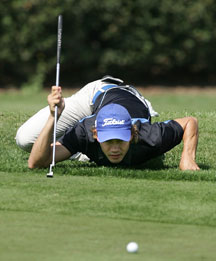 ...his stroke lacks the confidence that may come with a few more starts on the big tour. The galleries were huge for him in Miami, and it will be interesting to see how his appeal translates to areas not as dominated by Latins as south Florida, but he seems to have the charisma to step up to stardom.
With his length and shot-making skills, look for him to make an impact at The Masters.
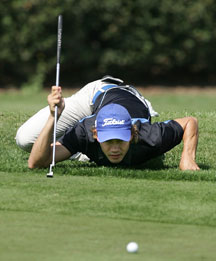 ...his stroke lacks the confidence that may come with a few more starts on the big tour. The galleries were huge for him in Miami, and it will be interesting to see how his appeal translates to areas not as dominated by Latins as south Florida, but he seems to have the charisma to step up to stardom.
With his length and shot-making skills, look for him to make an impact at The Masters.
Saturday, March 04, 2006
Dinner and a Show
There is a Vietnamese restaurant in San Francisco called Tu Lan. It's on 6th street, near Market, NOT a nice neighborhood. But it was right on my way home from Moscone Center, where I am involved in the lead up to a keynote address I'm working on for an Intel executive, and I didn't want to have to cook when I got home, since I still have work to do. And there was a parking place right across the street.
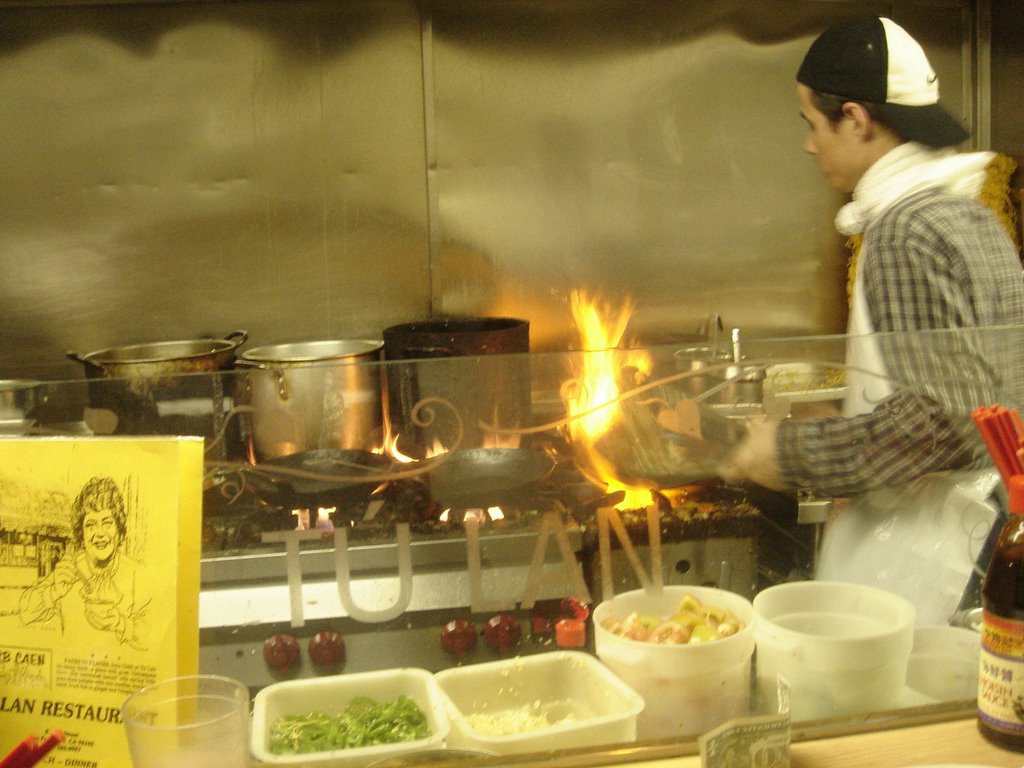
As I walked in, I wondered if I should buy a paper to occupy myself while I waited for my food. I needn't have worried - the entertainment I sought was right in front of me. Sitting at the counter, I had full view of the two main cooks working at the stove. They maintained an amazing pace (Tu Lan does a big takeout business), working smoothly together, grabbing ingredients, using their tongs as pretty much the only utensil. The stove spewed flame, customers came and went (including a man whose shaved head was tattooed all over with a spiderweb pattern, even around his eyes, and a homeless man who came in and sold some batteries to the restaurant's proprietor), and dishes kept being plated.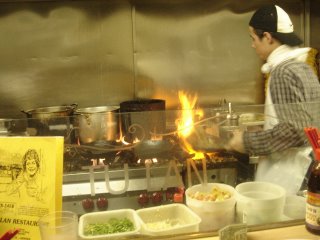
I wasn't bored for a second.
As I walked in, I wondered if I should buy a paper to occupy myself while I waited for my food. I needn't have worried - the entertainment I sought was right in front of me. Sitting at the counter, I had full view of the two main cooks working at the stove. They maintained an amazing pace (Tu Lan does a big takeout business), working smoothly together, grabbing ingredients, using their tongs as pretty much the only utensil. The stove spewed flame, customers came and went (including a man whose shaved head was tattooed all over with a spiderweb pattern, even around his eyes, and a homeless man who came in and sold some batteries to the restaurant's proprietor), and dishes kept being plated.
I wasn't bored for a second.
Graydon Carter figured it out
On "Real Time with Bill Maher" Friday, Vanity Fair editor Graydon Carter mentioned how he has noticed that President Bush seems to speak to audiences at press briefings as if they are idiots. He does this, Carter says, "because that's the way these issues were explained to HIM."
Friday, March 03, 2006
Van at the Rancho - Part 2, The Show
(The story of how I got tickets to this show can be found by scrolling down to Part 1.)
Van Morrison. On the stage in an intimate setting. Just 200 people. I had high expectations – and they were surpassed.
The Rancho Nicasio has been described – not inaccurately – as a “roadhouse.” The show/rehearsal was scheduled for 4:00 p.m. I have no idea why. Security was tight, but relaxed. I arrived and gave the man at the door my name. He let me into the bar, where I gave my name again and received my receipt and wristband.
The bar was full. Full of people exactly my age. Seriously, I think everyone in the room was 48.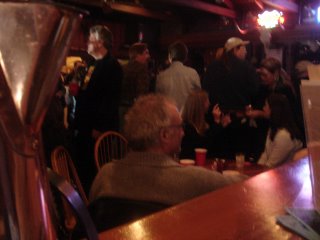 There might have been one or two who were 51, but that’s pretty much the range. Although completely lacking in diversity, there was a palpable sense of excitement in the room. I also felt a sense of gratitude. I’m sure somewhere there were some jaded guests of the record company feeling bored, but most people I overheard or spoke to were almost giddy over what was to come, and felt blessed to be a part of the day.
I’ve heard Van play live only once before, at the Masonic Auditorium, which seats more than 3,000. This is the way to listen to him.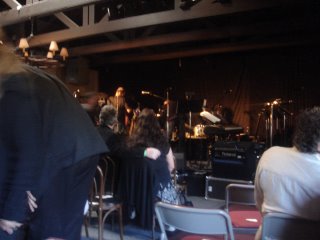 In this small venue, I had a completely different experience of the power of his music in general -- and of his voice in particular. His singing is so elemental. Van can find the cry of humanity in every song he sings. Even when it’s a bouncy pop hit like his “Brown-Eyed Girl,” Van’s voice carries with it a primal longing, calling to mind a time when our species was first becoming self-aware, and we cried out in the attempt to communicate this giant leap we were making into consciousness. Or, he just listened to a lot of blues growing up. (Personally, I think it’s both.)
The band he brought with him was stellar. There was a horn player, an unassuming, somewhat doughy guy, who one minute could make his clarinet whistle a gentle little tune – and in the next coax huge, clear sounds out of his alto sax. (Speaking of sax, Van plays some himself – and he’s pretty damn good on that horn.) The two trumpeters killed me, and the guy on the old organ in the corner (I think a Hammond B3) tore it up every time Van went to him. The keyboard player was the only guy who couldn’t keep up. It was kind of sad – virtually every other musician who took a solo (including the bass player) got polite to raucous applause (raucous for Mr. Pillsbury on his reeds) – and the keyboardist got bupkus.
I was worried that since the new record is country and western (Van stressed country AND western when he began that section of the show), that those tunes might dominate the show. But they comprised only about 40% of the set. I loved them all. I’m ready to buy the record. His country and western players were fantastic (a male fiddler and a female pedal steel player) and his backup trio, the Crawford Bell Singers added a lovely sweet tone that balanced nicely with Van’s guttural soulfulness.
The show included two major hits, and he did great versions of both. “Moondance” especially was lovely. I love the song, but it’s always been a bit mainstream. Today’s show reminded why it became mainstream – because it’s a great song. People heard it, liked it, wanted to hear it again. The trumpeter tossed in a little reference to Miles Davis’s “Freddie Freeloader,” which I liked. In fact, he turned the song into a chance for most of the band to solo, which helped to reinvent one of Van’s classics. The other hit, “Brown-Eyed Girl” was described by Van as “the money song.” After he played it, he made some reference to “28 years of money” that I couldn’t quite understand.
40% the new record and 10% hits left Van time to explore his catalogue – and he came up with some of my favorites: “Healing Game,” “Did Ya Get Healed” (is a theme developing here?), “In the Midnight” (guess not) and “Tore Down a la Rimbaud.” The latter he dropped the tempo back a bit, giving the tune a more melancholy flavor.
He took the exact opposite tack with “Have I Told You Lately,” the closest Van comes to Hallmark sentiment. (Usually he’s much more oblique and poetic.) For that reason, it’s never been one of my favorites; but this time they picked up the tempo and turned it into (I think) a shuffle.
It was a fantastic experience.
Following is the set list. I can’t vouch for the accuracy of all song titles. If I don’t know almost for certain that I have the name right, I’ll put a question mark next to it.
Did Ya Get Healed
The Magic Time
Have I Told You Lately
Fame (?) (Which had a great line: “There ain’t nothin’ fair about fame.”)
Tore Down a la Rimbaud
Bucket’s Got a Hole in It
There Stands the Glass
Big Blue Diamonds
Things Have Gone To Pieces
Moondance
In the Midnight
Pay the Devil
This Has Got To Stop
More and More
Playhouse
Your Cheatin’ Heart
(NO IDEA)
All Work and No Play (?)
Brown-Eyed Girl
In the Celtic New Year
Healing Game
(He also played "Don’t You Make Me High," I think right around "Big Blue Diamonds," but I'm not sure.)
Van Morrison. On the stage in an intimate setting. Just 200 people. I had high expectations – and they were surpassed.
The Rancho Nicasio has been described – not inaccurately – as a “roadhouse.” The show/rehearsal was scheduled for 4:00 p.m. I have no idea why. Security was tight, but relaxed. I arrived and gave the man at the door my name. He let me into the bar, where I gave my name again and received my receipt and wristband.
The bar was full. Full of people exactly my age. Seriously, I think everyone in the room was 48.
 There might have been one or two who were 51, but that’s pretty much the range. Although completely lacking in diversity, there was a palpable sense of excitement in the room. I also felt a sense of gratitude. I’m sure somewhere there were some jaded guests of the record company feeling bored, but most people I overheard or spoke to were almost giddy over what was to come, and felt blessed to be a part of the day.
 I’ve heard Van play live only once before, at the Masonic Auditorium, which seats more than 3,000. This is the way to listen to him.
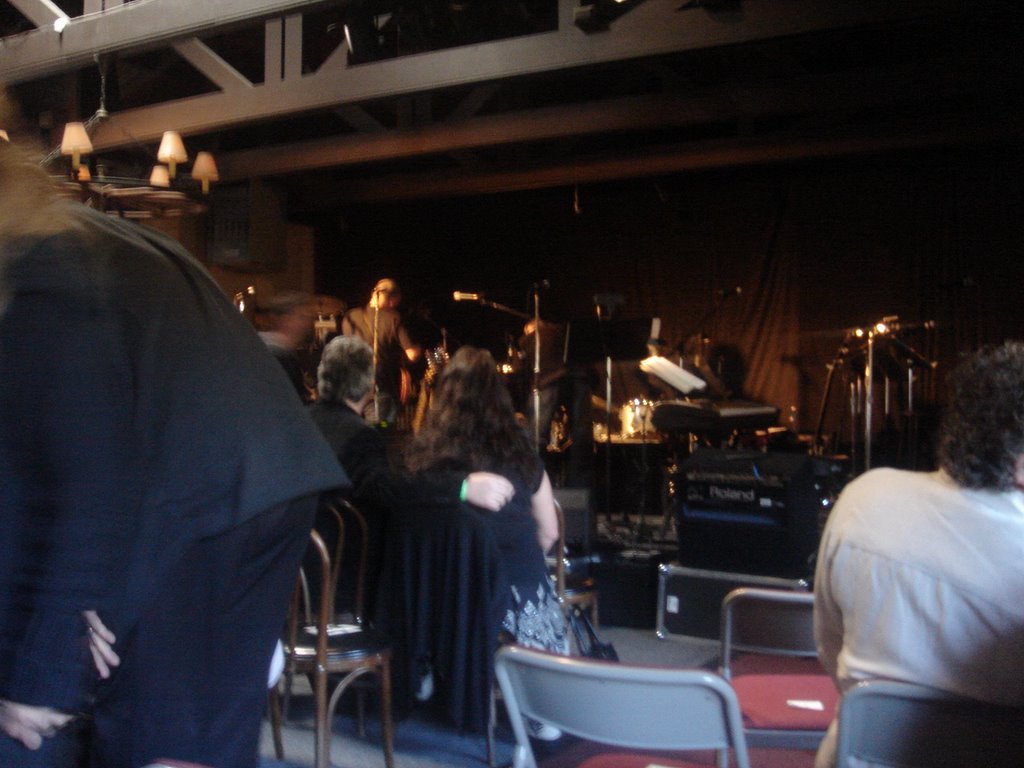 In this small venue, I had a completely different experience of the power of his music in general -- and of his voice in particular. His singing is so elemental. Van can find the cry of humanity in every song he sings. Even when it’s a bouncy pop hit like his “Brown-Eyed Girl,” Van’s voice carries with it a primal longing, calling to mind a time when our species was first becoming self-aware, and we cried out in the attempt to communicate this giant leap we were making into consciousness. Or, he just listened to a lot of blues growing up. (Personally, I think it’s both.)
The band he brought with him was stellar. There was a horn player, an unassuming, somewhat doughy guy, who one minute could make his clarinet whistle a gentle little tune – and in the next coax huge, clear sounds out of his alto sax. (Speaking of sax, Van plays some himself – and he’s pretty damn good on that horn.) The two trumpeters killed me, and the guy on the old organ in the corner (I think a Hammond B3) tore it up every time Van went to him. The keyboard player was the only guy who couldn’t keep up. It was kind of sad – virtually every other musician who took a solo (including the bass player) got polite to raucous applause (raucous for Mr. Pillsbury on his reeds) – and the keyboardist got bupkus.
I was worried that since the new record is country and western (Van stressed country AND western when he began that section of the show), that those tunes might dominate the show. But they comprised only about 40% of the set. I loved them all. I’m ready to buy the record. His country and western players were fantastic (a male fiddler and a female pedal steel player) and his backup trio, the Crawford Bell Singers added a lovely sweet tone that balanced nicely with Van’s guttural soulfulness.
The show included two major hits, and he did great versions of both. “Moondance” especially was lovely. I love the song, but it’s always been a bit mainstream. Today’s show reminded why it became mainstream – because it’s a great song. People heard it, liked it, wanted to hear it again. The trumpeter tossed in a little reference to Miles Davis’s “Freddie Freeloader,” which I liked. In fact, he turned the song into a chance for most of the band to solo, which helped to reinvent one of Van’s classics. The other hit, “Brown-Eyed Girl” was described by Van as “the money song.” After he played it, he made some reference to “28 years of money” that I couldn’t quite understand.
40% the new record and 10% hits left Van time to explore his catalogue – and he came up with some of my favorites: “Healing Game,” “Did Ya Get Healed” (is a theme developing here?), “In the Midnight” (guess not) and “Tore Down a la Rimbaud.” The latter he dropped the tempo back a bit, giving the tune a more melancholy flavor.
He took the exact opposite tack with “Have I Told You Lately,” the closest Van comes to Hallmark sentiment. (Usually he’s much more oblique and poetic.) For that reason, it’s never been one of my favorites; but this time they picked up the tempo and turned it into (I think) a shuffle.
It was a fantastic experience.
Following is the set list. I can’t vouch for the accuracy of all song titles. If I don’t know almost for certain that I have the name right, I’ll put a question mark next to it.
Did Ya Get Healed
The Magic Time
Have I Told You Lately
Fame (?) (Which had a great line: “There ain’t nothin’ fair about fame.”)
Tore Down a la Rimbaud
Bucket’s Got a Hole in It
There Stands the Glass
Big Blue Diamonds
Things Have Gone To Pieces
Moondance
In the Midnight
Pay the Devil
This Has Got To Stop
More and More
Playhouse
Your Cheatin’ Heart
(NO IDEA)
All Work and No Play (?)
Brown-Eyed Girl
In the Celtic New Year
Healing Game
(He also played "Don’t You Make Me High," I think right around "Big Blue Diamonds," but I'm not sure.)
Thursday, March 02, 2006
Van at the Rancho - Part 1, Getting In
Van Morrison is an artist. For more than 40 years, since the seminal “Gloria,” recorded with the British band Them, he’s been engaged in the process of trying to share the human experience with us by tapping something mysterious inside himself that comes out in the form of amazing, soulful music. (But then, I’m a fan.) Along the way, he’s become an icon, inspiring musicians and songwriters from Bruce Springsteen to Patti Smith to U2. (Bruce Springsteen once said “How come it seems that every year Van Morrison comes out with a record and every year it’s great and every year nobody notices?”) Van is about to release his 35th album, “Pay The Devil,” and embarking on a six-city mini-tour in support of it. The tour is playing mostly large auditoria, including the original home of the Grand Ole Opry, the Ryman. The choice of the Ryman is fitting, since the new record is a collection of country and western songs.
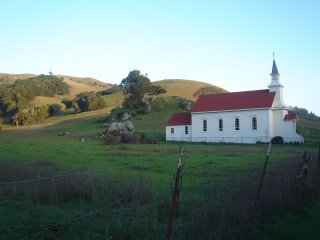
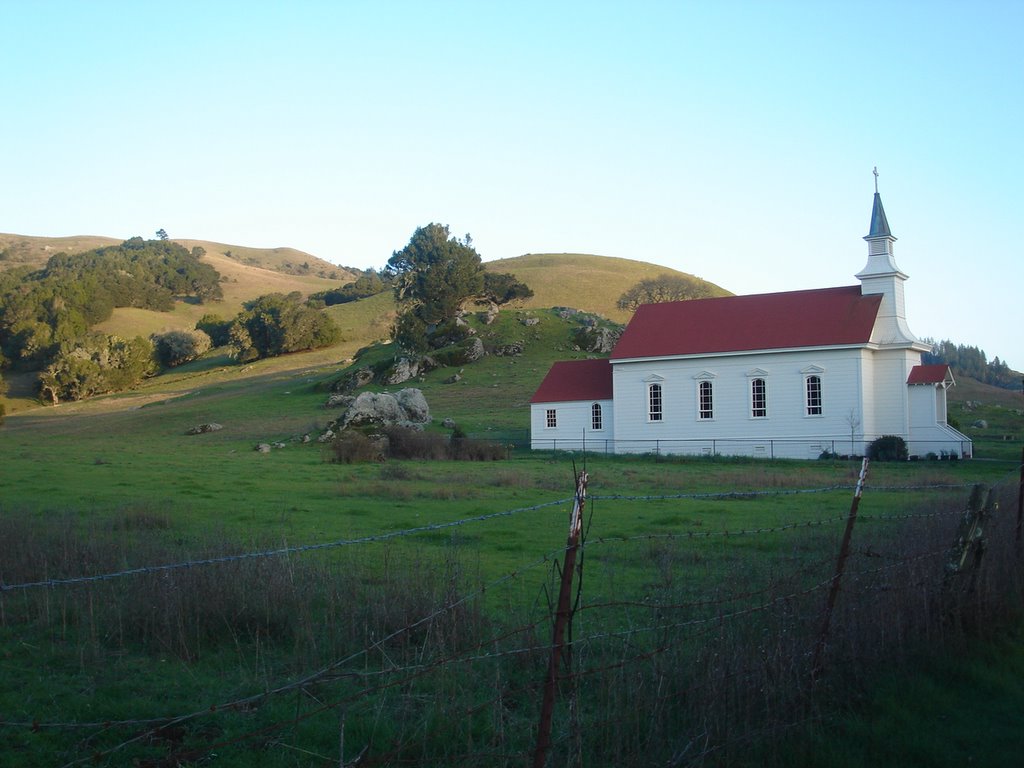
However, Van chose to open the tour at Rancho Nicasio, a venue that seats just 200 people. Barely. It’s primarily a restaurant, with music on the weekends.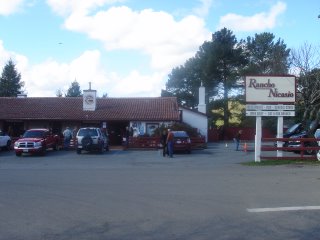 The town of Nicasio is a tiny village in the middle of agricultural lands. It’s surrounded by dairies and horse farms. This is the church.
 And this…
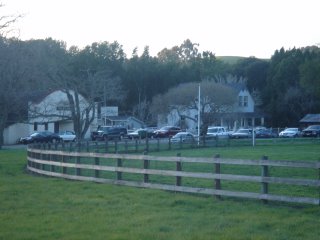 …is the dense part of town. The Rancho Nicasio archly claims the mantle of "Best Restaurant in Town."
For some reason, Van decided Rancho Nicasio was where he wanted to begin this tour. In fact, it wasn’t really the beginning of the tour. It was more the final dress rehearsal for the tour. And I got to be there.
I learned about the show a month ago when I received an e-mail from Lost Highway Records, the label for the new record. When I saw that the tour was scheduled to start at the Rancho Nicasio (just 10 minutes over the hill from my house), I immediately picked up the phone and called them. The woman who answered the phone knew nothing about the show, but told me to call back after 11 and ask for Max. I did. The same woman answered and went to fetch Max. But after 2-3 minutes, she came back on the phone and said “We have no information about that.” It sounded exactly like the sort of thing characters say in movies when they are covering something up. So I channeled my inner Woodstein and tracked down an executive of Lost Highway Records, who told me “Oh yeah, it’s real important to Van for some reason. It’s happening.”
So, I called back the Rancho. This time they came clean. Van was indeed scheduled to play, but the contracts hadn’t been completed and no tickets could be sold until they had. But I was welcome to call every day and check the status. After a few days of that, they changed their minds and decided I should check the website instead. Which I did. But the date was never announced on the web.
This past Sunday, I decided to call the Rancho again. This time I was told the show was sold out. As it turns out, they never put it up on their web site. Max told me the record company took half the seats (though the record exec told me specifically a month earlier that this was the only show on the tour for which they had NOT held a block of seats. I doubt Max was lying, so the label must have changed its mind), and the other half went to people on the Rancho Nicasio e-mail list and local friends and insiders. I was disappointed, but sort of resigned; I’d always sort of suspected it was too good to be true, that only insiders would have access to such a show. However, Max said he’d take my number and call if something came up.
The day before yesterday, the phone rang and Max told me he had room for me. I jumped.
NEXT: The Show
However, Van chose to open the tour at Rancho Nicasio, a venue that seats just 200 people. Barely. It’s primarily a restaurant, with music on the weekends.
 The town of Nicasio is a tiny village in the middle of agricultural lands. It’s surrounded by dairies and horse farms. This is the church.
 And this…
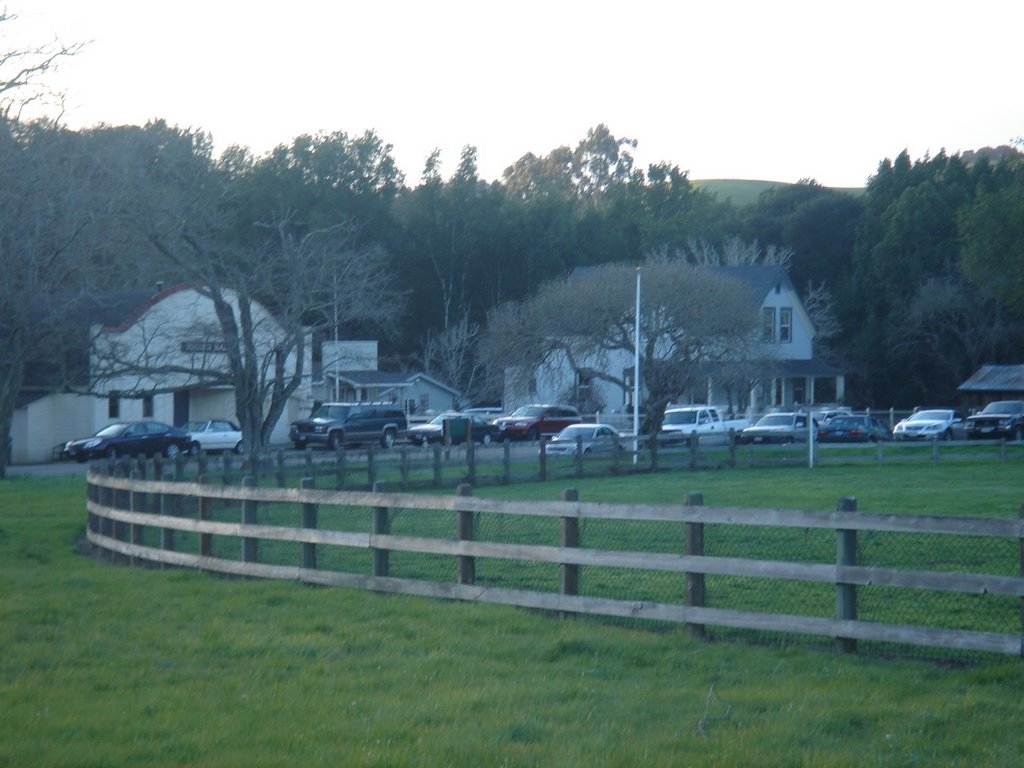 …is the dense part of town. The Rancho Nicasio archly claims the mantle of "Best Restaurant in Town."
 For some reason, Van decided Rancho Nicasio was where he wanted to begin this tour. In fact, it wasn’t really the beginning of the tour. It was more the final dress rehearsal for the tour. And I got to be there.
I learned about the show a month ago when I received an e-mail from Lost Highway Records, the label for the new record. When I saw that the tour was scheduled to start at the Rancho Nicasio (just 10 minutes over the hill from my house), I immediately picked up the phone and called them. The woman who answered the phone knew nothing about the show, but told me to call back after 11 and ask for Max. I did. The same woman answered and went to fetch Max. But after 2-3 minutes, she came back on the phone and said “We have no information about that.” It sounded exactly like the sort of thing characters say in movies when they are covering something up. So I channeled my inner Woodstein and tracked down an executive of Lost Highway Records, who told me “Oh yeah, it’s real important to Van for some reason. It’s happening.”
So, I called back the Rancho. This time they came clean. Van was indeed scheduled to play, but the contracts hadn’t been completed and no tickets could be sold until they had. But I was welcome to call every day and check the status. After a few days of that, they changed their minds and decided I should check the website instead. Which I did. But the date was never announced on the web.
This past Sunday, I decided to call the Rancho again. This time I was told the show was sold out. As it turns out, they never put it up on their web site. Max told me the record company took half the seats (though the record exec told me specifically a month earlier that this was the only show on the tour for which they had NOT held a block of seats. I doubt Max was lying, so the label must have changed its mind), and the other half went to people on the Rancho Nicasio e-mail list and local friends and insiders. I was disappointed, but sort of resigned; I’d always sort of suspected it was too good to be true, that only insiders would have access to such a show. However, Max said he’d take my number and call if something came up.
The day before yesterday, the phone rang and Max told me he had room for me. I jumped.
NEXT: The Show
Wednesday, March 01, 2006
No-Spin Cycle
On August 28, the day before Hurricane Katrina struck, President Bush was briefed on just how devasatating the storm could be. After the storm, when the extent of the destruction was becoming known, Bush said "no one could have anticipated the breach of the levees." A video released today of that August briefing shows just the opposite is true.
This could be a bad one for the President. It will be tough for the White House to spin. The President's spokesman, Trent Duffy said, "I hope people don't draw conclusions from the president getting a single briefing." Not the point. One briefing was enough if it told him the levees were in danger and then a few days later he claims he had no idea they were in peril.
This could be a bad one for the President. It will be tough for the White House to spin. The President's spokesman, Trent Duffy said, "I hope people don't draw conclusions from the president getting a single briefing." Not the point. One briefing was enough if it told him the levees were in danger and then a few days later he claims he had no idea they were in peril.
Subscribe to:
Posts (Atom)


